Your car doesn’t care what season it is, but the season absolutely cares about your car. Whether you’re dealing with road salt eating at your undercarriage in January or scorching pavement baking your tires in July, every time of year throws something different at your vehicle. This seasonal car care tips guide breaks it all down so you know exactly what to do and when to do it.
Why Seasonal Maintenance Matters
A lot of car owners think about maintenance only when something goes wrong. That’s the expensive way to do it. Seasonal car care is about staying ahead of problems before they become breakdowns, big repair bills, or safety issues on the road.
The reason seasonal maintenance matters so much is that your car’s systems respond differently to temperature, humidity, and road conditions. Tires lose pressure in cold air. Coolant gets tested by extreme heat. Wiper blades crack and streak in the summer sun. Ignoring these changes across the year means you’re constantly playing catch-up instead of staying in control.
For anyone buying a used car, this guide is especially useful. A vehicle that’s been well maintained through every season holds its value better, runs more reliably, and gives you fewer surprises. You can always use our free VIN lookup tool to check a used car’s history before you buy, but once it’s yours, a solid car care routine is what keeps it that way.
Spring Car Care Tips: Recovering From Winter
Winter is rough on a car. Salt, sand, potholes, and freezing temperatures all take a toll. Spring is your chance to assess the damage and get things back on track.
Start with a thorough wash, and don’t just hit the top of the car. Get underneath it. Road salt causes corrosion on your brake lines, exhaust, and frame. Letting that salt sit into spring accelerates rust in a way that’s genuinely hard to reverse. A proper undercarriage wash is one of the best spring car care tips you can follow.
Check your tires carefully. Look at the tread depth after a winter of hard use, and check your tire pressure as temperatures rise. Cold weather causes tire pressure to drop, and you may have been running underinflated all winter without realizing it. Use a gauge and top them up to the manufacturer’s spec listed on the door jamb sticker.
Spring is also a good time to swap out your winter wiper blades if you ran them all season. Winter-spec wipers are heavier and less efficient in warm rain. Replacing them now means you’re not squinting through a streaky windshield on the first wet spring drive.
Summer Car Care Tips: Beating the Heat
Heat is harder on a car than most people realize. It stresses the cooling system, degrades rubber components, and can cause tires to blow out if they’re already worn or underinflated.
Check your coolant before summer hits. Your engine needs the right mix of antifreeze and water to manage high operating temperatures. A 50/50 mix of antifreeze and distilled water is typically recommended, though you should always follow your owner’s manual. If your coolant looks brown or rusty instead of green or orange, it needs to be flushed and replaced.
Tire pressure actually increases in hot weather as the air inside the tire expands. That doesn’t mean you should deflate your tires, but you should check tire pressure regularly and keep it at the spec for your vehicle. Overinflated tires on hot pavement wear unevenly and increase your blowout risk.
Your battery also works harder in summer heat. According to AAA, the average car battery lasts 3 to 5 years, but extreme temperatures, both hot and cold, can shorten that significantly. If yours is over three years old, get it tested before summer peaks.
Don’t overlook your windshield washer fluid in summer either. Bug splatter, dust, and road grime build up fast. Keep your washer reservoir topped up with a summer-formula fluid that won’t streak in the heat.
Fall Car Care Tips: Prepping for Cold Weather
Fall is your setup season. The work you do now determines how well your car handles everything winter throws at it. Think of fall car care tips as buying insurance for the next four months.
Get your brakes inspected. A shop can measure your brake pad thickness and check your rotors for wear. You want to know your brakes are solid before roads get slick. Don’t wait until you feel that grinding sensation in January.
Check your coolant level and condition again. The antifreeze that protects your engine from freezing needs to be at the right concentration. You can pick up a simple coolant tester at any auto parts store and check it yourself in about two minutes.
Switch your wiper blades to winter-spec blades if you live somewhere with heavy snow or ice. Standard wiper blades can get clogged with ice and stop clearing your windshield properly. Winter blades have a rubber cover over the frame that prevents that buildup.
Swap your washer fluid for a winter-formula product that won’t freeze in the reservoir or on your windshield. Regular summer fluid will turn to ice the second it hits a cold windshield in freezing temps, and that’s a visibility hazard you really don’t want.
Winter Car Care Tips: Defending Against the Elements
Cold weather car care is about protection and preparation. Once the temperature drops, your car is dealing with freezing conditions, road salt, reduced traction, and shorter days that mean more driving in the dark.
Check your headlights. This sounds basic, but a lot of drivers don’t realize one of their headlights is dim or out until someone tells them. In winter, you need full visibility and you need other drivers to see you clearly.
Keep your tires in top shape all winter. If you’re running all-season tires, check the tread depth and make sure you have enough grip left. If you’re in a region with serious snow and ice, dedicated winter tires make a measurable difference in stopping distance and handling. Your tire choice in winter is a safety decision, not just a maintenance one.
Wash your car regularly through winter, especially underneath. Salt-based ice melters are highly corrosive to metal. That corrosion works fast on brake lines, wheel wells, and the undercarriage. Washing every week or two when roads are being salted is one of the most protective car care habits you can build.
Keep the Battery in Good Shape
Battery failure is one of the most common reasons cars won’t start in winter. Cold temps thicken engine oil and make the battery work harder to turn the engine over. A battery that’s fine in September can leave you stranded in December.
Get it tested at any auto parts store. They’ll do it for free in most cases. If the battery is over three years old or showing signs of weakness, replace it before winter. It’s a lot cheaper than a tow and an emergency call at 7am on a frozen morning.
Replace the Wiper Blades
Most drivers run their wiper blades until they’re leaving streaks across the windshield. By that point, you’ve been driving with compromised visibility for weeks. Wiper blades typically last six to twelve months depending on use and climate.
Change them at the start of fall and spring. It’s a five-minute job, costs about twenty dollars, and makes a real difference on a rainy or snowy drive. While you’re at it, check the wiper arms and make sure the blades are sitting flush against the glass. A bent wiper arm will ruin a new blade quickly.
Clear the Windows
Visibility is non-negotiable. In winter, that means clearing every window, not just the driver’s side, before you drive. Ice scrapers and a good windshield de-icer spray are basic tools that belong in your car from October through March.
Use a proper windshield washer fluid rated for below-freezing temperatures. Top off your washer reservoir every few weeks in winter because you’ll go through it fast on slushy roads. Running out of washer fluid mid-drive with a dirty windshield is both dangerous and avoidable.
Check Under the Hood
Fluid levels are the easiest thing to check and one of the most commonly ignored forms of car care. Pop the hood every month or so and run through the basics.
- Coolant: Check the overflow reservoir. It should be between the min and max lines. If you’re adding coolant frequently, that could indicate a leak.
- Brake fluid: Low brake fluid can signal worn brake pads or a leak in the system. Either one needs attention.
- Oil: Pull the dipstick and check both the level and the condition. Dark, gritty oil means it’s overdue for a change.
- Washer fluid: Top it up. Seriously. It takes thirty seconds.
Year-Round Maintenance Checklist
Some car care tasks don’t have a season. They just need to happen on a regular schedule no matter what month it is. Good year-round car care habits are what separate drivers who rarely have problems from those who always seem to be dealing with something.
Stay current on oil changes. Follow your manufacturer’s recommendation, typically every 5,000 to 7,500 miles for modern vehicles using full synthetic oil, but check your manual. Keep tires rotated every 5,000 to 7,500 miles too. Regular rotation extends tire life significantly and keeps wear even across all four tires.
Check your tire pressure monthly. Tires lose roughly one PSI per month naturally, so staying on top of this is a simple habit that improves fuel economy, handling, and tire longevity. A good tire pressure gauge costs less than five dollars and lives in your glove box.
Eco-Friendly Car Care Practices
Taking care of your car and being mindful of your environmental impact aren’t mutually exclusive. A few small changes make a difference without sacrificing good car care.
Use waterless or low-water car wash products when possible. Dispose of old motor oil, coolant, and brake fluid properly. Most auto parts stores accept used fluids for recycling at no charge. Properly inflated tires also improve fuel efficiency, which reduces emissions over time. It’s one of those car care tips that’s good for your wallet and the environment at the same time.
Tools and Products to Keep in Your Car Care Kit
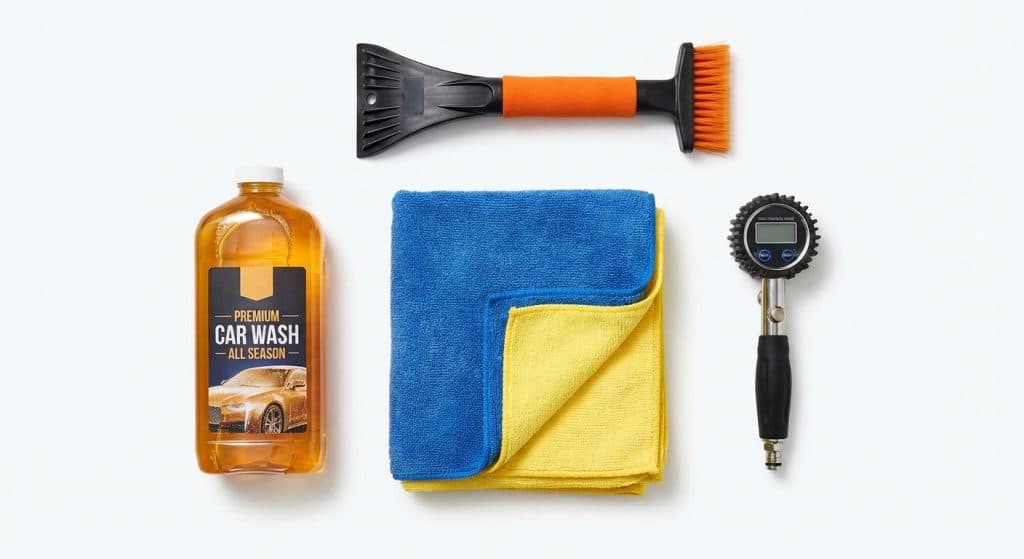
You don’t need a full garage setup to stay on top of basic car care. A simple kit goes a long way toward handling small issues and staying prepared.
- Tire pressure gauge
- Ice scraper and snow brush
- Windshield de-icer spray
- Jumper cables or a portable jump starter
- Coolant and oil (small emergency quantities)
- Spare fuses and a basic toolkit
- Waterless wash spray and microfiber towels
The Role of Professional Services in Seasonal Car Care
DIY car care gets you pretty far, but some things need a professional eye. A good independent mechanic or automotive service shop should be part of your seasonal maintenance routine, not just a place you go when something breaks.
Book a seasonal inspection in the fall and spring. A mechanic will check things you can’t easily see yourself, like brake rotor thickness, suspension components, and steering system wear. They can also test your battery, check belts and hoses, and make sure your four-wheel or all-wheel drive system is working properly if you have one.
Finding a trustworthy mechanic before you need one in a hurry is one of the most practical car care tips there is. Ask friends, read reviews, and get a second opinion on any large repair estimate.
How Branford Car Wash Can Help
A full-service car wash with express lube services can take a lot of the seasonal car care work off your plate. Places like Branford Car Wash and Express Lube offer undercarriage washes that help combat salt-related corrosion in winter, oil changes, and fluid top-offs. Regular visits through the year, especially after winter weather and before summer heat kicks in, support a solid year-round maintenance routine without requiring you to do everything yourself.
Protect Your Car Through Every Season
Seasonal car care isn’t about being obsessive. It’s about being consistent. Catching a low tire before a blowout, catching corroded brake lines before they fail, or keeping your windshield clear on a winter morning are all things that come from small, regular habits.
If you’re shopping for a used car and want to know whether the previous owner kept up with their seasonal car care, start with a free VIN lookup tool to pull the vehicle’s history. From there, get a pre-purchase inspection from a mechanic you trust. And once the car is yours, use this guide to build the kind of routine that keeps it running well for years to come. You can also browse used cars by make to find models known for reliability before you commit to anything.
Take care of your car through every season, and it’ll take care of you when it matters most.
Was this helpful?
Put it to work. Research your next car or browse our top gear picks.