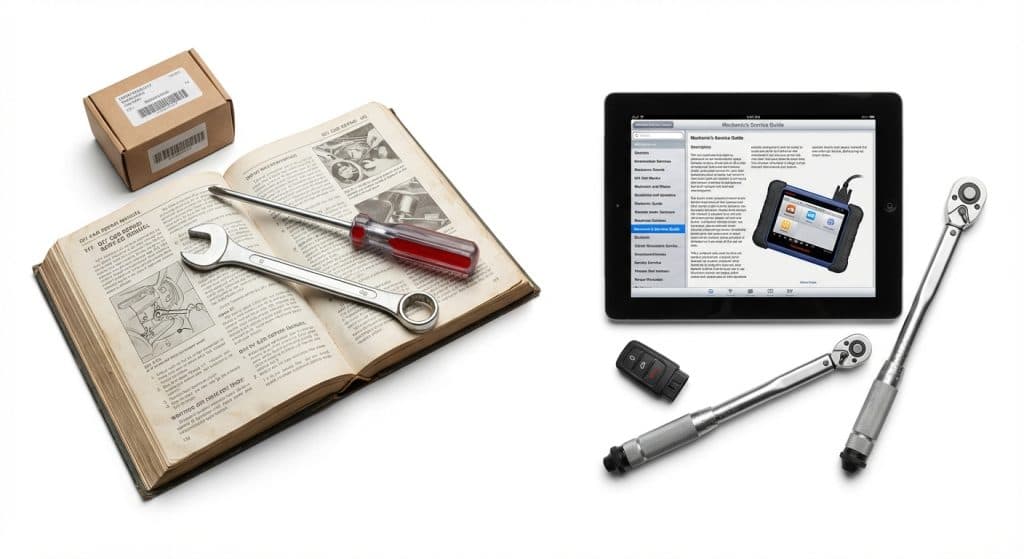
Owning a used car means repair bills will find you eventually. The real question is which repairs you can handle yourself and which ones you should hand off to a professional mechanic before something goes seriously wrong.
This guide breaks it all down. You’ll learn where DIY car repair saves you real money, where it can get you into trouble, and how to make smart calls every time something goes wrong with your vehicle.
Understanding the DIY Approach to Car Repairs
Before you touch a wrench, you need an honest framework for deciding whether a repair belongs in your driveway or at a shop. According to ASE G1 (Auto Maintenance and Light Repair) standards, every DIY decision should come down to three things: safety risk, tool requirements, and the consequences of getting it wrong.
A botched wiper blade swap costs you a streaky windshield. A botched brake job can cost you your life. That gap is why not every repair is created equal.
Average labor rates at independent shops run $80 to $130 per hour, with dealerships charging $125 to $200 per hour. DIY car repair eliminates those labor costs entirely. But you trade money for time, and you accept full responsibility if something goes sideways.
The Advantages of DIY Car Repairs
The most obvious win is cost. When you handle your own repair, you pay for parts only. On simple jobs, that can mean saving $100 or more in a single afternoon. Over the life of a used car, that adds up fast.
There’s also the knowledge factor. Every time you complete a maintenance task yourself, you understand your car better. You’ll spot problems earlier, catch things a quick shop visit might miss, and feel a lot less helpless when something breaks on the road.
DIY also lets you control the quality of parts. You choose what goes into your vehicle instead of trusting that a busy shop grabbed the right components for your specific make and model.
The Drawbacks of DIY Car Repairs
Confidence can outrun skill very quickly. A lot of people watch a 10-minute YouTube video, order parts, and discover halfway through that their specific model has a completely different setup than the tutorial showed.
Some repairs also require specialized tools you won’t find in a basic socket set. Buying those tools for a one-time job can actually cost more than just paying a mechanic. And if you make a mistake on a safety-critical system, the repair bill at the shop will be far higher than if you’d gone there in the first place.
Time is the other thing people underestimate. What takes a trained technician 45 minutes can take a first-timer an entire Saturday.
When to DIY
Some jobs are genuinely beginner-friendly. These are the repairs and maintenance tasks where the tools are basic, the stakes are low, and good instructional resources are everywhere. Here’s where DIY car repair makes the most sense:
- Oil change: Draining old oil and replacing the filter is one of the most well-documented DIY tasks out there. You’ll need a drain pan, the right oil filter, and the correct oil spec for your engine. An oil change at a shop typically runs $50 to $100+, while doing it yourself often costs half that in parts alone.
- Air filter replacement: Swapping a clogged air filter takes about five minutes and zero mechanical skill. Most air filter housings are held in place by a few clips or screws. A fresh air filter improves airflow to the engine and is one of the easiest maintenance tasks you can do.
- Wiper blade replacement: Wiper blades wear out every 6 to 12 months. When yours start streaking or skipping, swap them yourself. New wiper blades cost $15 to $40 at any auto parts store and click into place in minutes.
- Battery replacement: Disconnecting and swapping a battery is straightforward on most vehicles. Just note your radio presets beforehand and make sure you match the correct battery group size for your car.
- Cabin air filter: Like the engine air filter, this is often hidden behind your glove box and takes five minutes to swap. Doing it yourself vs. paying shop labor rates is a no-brainer.
If you’re buying a used car and want to check its history before deciding how much maintenance work you’re inheriting, run the VIN through our free VIN lookup tool first.
When to Call a Mechanic
Some repairs cross a line where DIY stops being smart. The brake system is the clearest example. Yes, brake pad replacement is technically something experienced DIYers can handle. But the full brake system, including calipers, brake lines, and ABS components, involves hydraulics, safety-critical tolerances, and failure modes that can get someone killed.
If you’re not confident in exactly what you’re doing, a professional mechanic is the right call on anything brake-related. This isn’t about gatekeeping. It’s about the fact that brake failure at highway speed is not recoverable.
Beyond brakes, here’s when to skip the DIY route and head straight to a shop:
- Transmission work: Internal transmission repair requires specialized tools, a clean environment, and significant expertise. The margin for error is tiny and the parts are expensive.
- Timing belt or chain replacement: Getting this wrong can destroy your engine. Unless you’ve done it before on the same engine family, this is a mechanic job.
- Electrical diagnosis: Modern vehicles have complex control modules. Chasing electrical gremlins without a proper scan tool and wiring diagrams burns hours and often leads nowhere useful.
- Suspension work beyond basic components: Replacing a strut assembly or control arm requires proper torque specs and alignment afterward. A bad alignment after suspension repair will eat your tires and can affect handling.
- Air conditioning system: Handling refrigerant is regulated and requires specific recovery equipment. This is not a driveway job.
Understanding Your Limits
The most valuable skill in auto repair isn’t knowing how to fix things. It’s knowing when to stop. A lot of expensive repair situations start because someone pulled a part off, got confused, and reassembled it incorrectly.
Be honest with yourself about your experience level before starting any job. If you’ve never done a brake pad replacement, don’t start on a vehicle you depend on for daily commuting. Practice on simpler tasks first. Build your skills over time.
There’s also no shame in doing partial DIY. Plenty of people buy their own parts and pay a mechanic just for labor. You skip the shop markup on parts and still get professional installation. That middle ground is often the smartest move on moderately complex repairs.
If you’re considering a used vehicle and want to see what you might be getting into financially, run the numbers with our car loan calculator to factor repair costs into your overall budget.
Preventive Maintenance Tips to Avoid Major Auto Repairs
The cheapest repair is the one you never have to make. Routine maintenance done consistently keeps small problems from becoming expensive ones. A neglected oil change can turn into a sludged engine. An ignored air filter can lead to poor fuel economy and premature wear.
Stay on top of these basics and you’ll dramatically reduce your chances of needing major auto repair work:
Check your tire pressure monthly. Under-inflated tires wear unevenly and reduce fuel economy. Check your wiper blades before the rainy season, not during. Replace your oil on schedule, whether that’s every 5,000 miles or every 10,000 miles depending on your vehicle and oil type. Swap your air filter annually or whenever it looks visibly dirty.
Keep a log of every maintenance task you complete. Date, mileage, and what was done. This helps you stay on schedule and also adds real value if you ever sell the car.
What DIY Car Repair Guides Are Actually Worth
A lot of people search Reddit and forums asking whether DIY car repair guides are worth buying or using. Honestly, it depends on the source. A quality repair manual from Haynes or a model-specific forum with verified information is genuinely useful. Random YouTube videos with no mention of your specific model year, engine code, or trim level are hit or miss.
The best free resources are owner forums for your exact vehicle. These communities often have write-ups from people who’ve done the exact repair you’re facing, on the exact same car, and they’ll flag the gotchas that a generic guide would miss.
For used car shoppers researching a specific make before buying, you can browse used cars by make to get a feel for what models tend to need more repair attention than others.
Striking a Balance That Works for You
There’s no single right answer to the DIY vs. mechanic question. The right answer changes depending on the repair, your experience, your tools, and what’s at stake if something goes wrong.
Start small. Do your own oil changes, your own air filter swaps, your own wiper blades. Get comfortable with your car. Read the service manual. Learn what normal looks and sounds like so you catch problems early. Then build up from there.
When a repair involves the brake system, the transmission, or anything tied to steering and safety, get a professional mechanic involved. There’s no medal for saving $80 in labor and spending $3,000 fixing the mistake.
Always get an independent inspection before buying any used vehicle. A pre-purchase inspection from a qualified mechanic costs $100 to $150 and can reveal repair needs that completely change whether a deal makes sense. That’s money well spent every single time.
Know your limits, keep up with the basics, and you’ll spend a lot less on car repair over the long run than the person who either skips maintenance entirely or attempts jobs they’re not ready for.
Was this helpful?
Put it to work. Research your next car or browse our top gear picks.