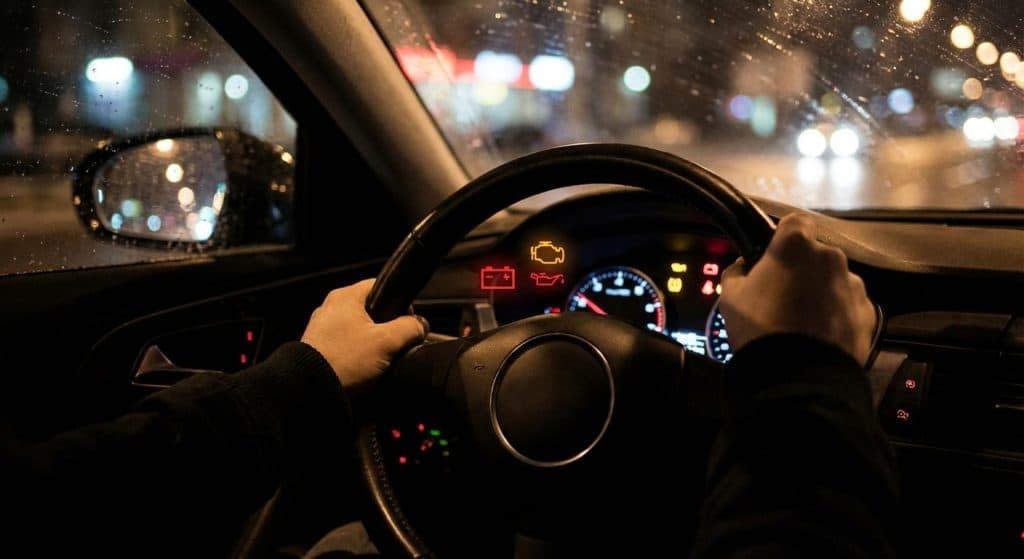
You’re driving along and suddenly a little symbol lights up on your dashboard. Now what? Whether you’re behind the wheel of a car you already own or you’re test-driving a used vehicle you’re thinking about buying, knowing what those lights mean can save you thousands of dollars and a lot of headaches.
This car warning lights guide walks you through every major dashboard warning light you’re likely to see, what it means, how serious it is, and what you should do about it. Bookmark this page. You’ll want it.
Jump To
- Check Engine
- Battery
- Coolant Temperature
- Transmission Temperature
- Oil Pressure Warning
- Tire Pressure Monitoring System
- Brake System
- Traction Control and Stability Control
- Airbag Warning
- Lamp Out
- Washer Fluid, Door Open, Low Fuel
- Headlights
- Seatbelt Indicator
- Front Fog Lights
Check Engine Light
The check engine light is the most misunderstood warning light on the planet. It looks like a little engine outline and can mean almost anything, from a loose gas cap to a failing catalytic converter. The range is enormous.
If this dashboard warning light is on when you start a used car you’re considering buying, treat it as a red flag. The seller might say “it’s nothing,” but you have no way to know that without plugging in an OBD-II scanner to pull the fault codes. Any mechanic can do this in five minutes, and many auto parts stores will do it for free.
A solid check engine light usually means something needs attention soon. A flashing check engine light is more urgent, often signaling a misfire that could damage your catalytic converter. Pull over when it flashes. Don’t ignore it and keep driving.
Before buying any used car, run a free VIN lookup to check the vehicle’s history and then get that light diagnosed by an independent mechanic. Never skip this step.
Battery Warning Light
This warning light looks like a little battery with a plus and minus sign. When it illuminates, your car is telling you that the electrical charging system isn’t keeping up. That usually points to a failing alternator, a worn-out battery, or a bad connection.
If this dashboard warning light comes on while you’re driving, you’re running purely off battery reserve. That means your car could stall within minutes to a few hours, depending on how much charge is left. Get to a safe place quickly.
On electric and plug-in hybrid vehicles, the battery warning light can take on additional meanings. According to U.S. News, a battery symbol with a lightning bolt means the charge level is low, while a battery symbol with a temperature gauge means the battery is overheating. If you see that overheating symbol, pull over and shut the car off as soon as it’s safe.
For used car buyers, a battery warning light during a test drive is a serious concern. Have the charging system tested before you hand over any money.
Coolant Temperature Warning Light
This warning light looks like a thermometer sitting in water. When it illuminates, your engine coolant is running dangerously hot. Overheating can warp cylinder heads and cause catastrophic, expensive engine damage in a short amount of time.
If this light comes on while you’re driving, pull over safely and shut the engine off. Don’t open the hood or the coolant reservoir cap right away. Let it cool down for at least 30 minutes. Low coolant, a busted thermostat, a failing water pump, or a clogged radiator can all cause this warning light to appear.
On a used car lot, start the vehicle cold and watch the temperature gauge as it warms up. If the coolant temperature warning light illuminates quickly or the gauge spikes, walk away. A car that overheats during a test drive has a problem the seller may not be disclosing.
Transmission Temperature Warning Light
Not every vehicle has this one, but if yours does, pay attention. This warning light typically looks like a thermometer inside a gear or fluid symbol. It means your transmission fluid is running too hot.
Transmission heat is a transmission killer. Overheated fluid breaks down, loses its lubricating properties, and accelerates wear on some of the most expensive components in your car. If this warning light illuminates, ease off your speed, find a safe place to stop, and let the transmission cool down.
Common causes include towing more than the vehicle is rated for, stop-and-go traffic in extreme heat, or low and degraded transmission fluid. For used car buyers, this warning light showing up during a test drive often points to deferred maintenance or a transmission that’s already been stressed hard.
Oil Pressure Warning Light
The oil pressure warning light looks like an old-fashioned oil can. This one is serious. When the oil pressure warning light illuminates, it means your engine isn’t getting enough oil pressure to properly lubricate its moving parts. Running an engine without adequate oil pressure can destroy it in minutes.
If this light comes on while you’re driving, pull over immediately and shut the engine off. Check the oil level with the dipstick. If the oil is fine, you may have a failing oil pump or a pressure sensor issue, but don’t assume it’s just the sensor. Have it checked by a professional before driving further.
Low oil pressure is not a “drive it to the shop” situation. It’s a “call for a tow” situation. For anyone buying a used car, an oil pressure warning during a test drive should be a deal-breaker until the problem is diagnosed and fixed.
Tire Pressure Monitoring System (TPMS)
The tire pressure monitoring system warning light looks like a flat tire with an exclamation point inside. It illuminates when one or more of your tires drops significantly below the recommended tire pressure. Most systems trigger around 25% below the recommended PSI.
Low tire pressure affects handling, fuel economy, and tire life. In a worst case, it leads to a blowout. When this warning light comes on, check the pressure in all four tires with a gauge and inflate them to the spec listed on the sticker inside your driver’s door jamb, not whatever’s written on the tire sidewall.
The tire pressure warning light can also illuminate when temperatures drop sharply overnight, since cold air causes tire pressure to fall. If you fill your tires and the light stays on, the TPMS sensor itself may be faulty or need resetting. According to USA Today, some vehicles let you reset the warning light manually, while others need a shop visit.
For used car buyers, a tire pressure warning light is usually minor but it’s worth asking about. A car that’s been sitting on low tires may have accelerated tread wear on one side.
Brake System Warning Light
There’s more than one brake warning light, and it matters which one you’re seeing. The most common brake warning light looks like an exclamation point inside a circle, sometimes with the letter “P.” This one often just means your parking brake is engaged. Release it and the warning light goes out. Simple.
But if that same brake warning light stays on after you release the parking brake, that’s a different story. Low brake fluid, a leak in the brake system, or worn brake pads can all trigger this warning light. The brake system is not something you put off. Brakes keep you and everyone else on the road safe.
Some vehicles have a separate warning light specifically for the brake system that looks different from the parking brake indicator. If any brake-related warning light illuminates and it’s not the parking brake, get your brakes inspected right away. Check the fluid level first. If the brake fluid is low, there’s either a leak or your brake pads have worn down to the point where the caliper pistons have extended, drawing more fluid from the reservoir.
During a used car test drive, pump the brake pedal before you move the car. A spongy or low brake pedal with a brake warning light on is a hard pass. Your brakes need to be right before anything else.
Traction Control and Stability Control Warning Lights
These two warning lights are related but not identical. The traction control warning light usually shows a car with wavy lines underneath it, sometimes with the letters “TC” or “TCS.” When it flashes briefly, it means the system is actively working to prevent wheel spin. That’s normal on slippery roads.
If the traction control warning light stays on continuously, the system has been turned off or has a fault. Some drivers disable traction control intentionally, so check that it hasn’t been switched off manually first. A permanently illuminated traction control warning light that can’t be cleared often points to a wheel speed sensor issue.
Stability control, sometimes called ESC or VSC, often uses the same warning light or a similar one. When this warning light illuminates and stays on, the system isn’t protecting you the way it should during hard cornering or emergency maneuvers. On newer vehicles, stability control is required by law, so a fault here is something a shop needs to look at.
Airbag Warning Light
The airbag warning light looks like a person sitting with a circle in front of them. When this warning light illuminates and stays on, it means the airbag system has a fault. That’s a significant safety concern because your airbags may not deploy in a crash, or worse, they could deploy unexpectedly.
For used car buyers, an airbag warning light is a major red flag. The car may have been in a previous accident where the airbags deployed and were improperly reset, or someone may have disabled the airbag system. Run a free VIN lookup to check for any reported accidents and have the system diagnosed by a certified shop before you buy.
Airbag repairs can be expensive, especially if a vehicle needs new airbag modules after a crash. Don’t assume the airbag warning light is a cheap fix until someone actually checks it.
Lamp Out Warning Light
Some vehicles, particularly European brands, have a dedicated warning light for burned-out exterior bulbs. It typically looks like a light bulb or a symbol of a car with lights indicated. When this warning light illuminates, walk around your car and check all your exterior lights including brake lights, turn signals, headlights, and reverse lights.
A burned-out brake light is a safety issue and a potential traffic ticket. The fix is usually simple and cheap, but don’t put it off.
Washer Fluid, Door Open, and Low Fuel
These dashboard warning lights are in a different category from the ones above. They’re informational rather than alarming, but they’re worth knowing.
- Washer fluid warning light: A windshield with water arcing over it. Means your washer fluid reservoir is low. Top it up. Consumer Reports classifies this as a minor, non-urgent indicator.
- Door open warning light: Usually looks like a car from above with a door ajar. It may also illuminate if your trunk or hood isn’t fully latched. Check everything is closed before driving.
- Low fuel warning light: The classic gas pump icon. You know this one. How far you can go depends on the car, but don’t push it. Most vehicles have 30 to 50 miles of range when this warning light first comes on, though that varies.
Headlight Indicator Lights
Most modern cars have dashboard indicator lights to confirm when your headlights, high beams, or automatic lights are active. These aren’t warning lights in the traditional sense, but knowing what they mean keeps you from accidentally driving on high beams and blinding other drivers.
A green headlight symbol means your low beams are on. A blue one means your high beams are active. If your car has automatic headlights and the dashboard light for them stays lit during daytime driving, it’s typically just confirming the auto mode is engaged.
Seatbelt Indicator
The seatbelt warning light shows a person with a belt across their chest. It illuminates when the car detects an unbelted occupant in a seat that has a sensor. It often comes with a chime. Buckle up. This one’s non-negotiable.
On used vehicles with older sensors, this warning light may illuminate even when you’re buckled due to a faulty sensor in the seat. If that happens, have the sensor checked, because a malfunctioning sensor can also affect how the car’s airbag system responds in a crash.
Front Fog Light Indicator
This dashboard light looks like a light shining through wavy lines, usually pointing to the left. It illuminates to confirm your front fog lights are on. Fog lights are designed for low-visibility conditions like fog, heavy rain, or snow. They throw a wide, low beam pattern that reduces glare and lights up the road directly in front of you.
Don’t use fog lights on clear nights. They can blind oncoming drivers. Turn them off when visibility improves, and the indicator light on your dashboard will go out with them.
Using This Guide When Buying a Used Car
A complete car warning lights guide like this one is a tool, but it’s even more useful when you apply it to a real-world inspection. Before you buy any used vehicle, take a few extra minutes to sit in the car and watch the dashboard carefully as you start the engine. Every warning light should briefly illuminate during startup as a system self-check, and then go out within a few seconds. That’s normal.
Any warning light that stays on after startup needs an explanation. Any warning light that the seller says they “don’t know much about” deserves deeper scrutiny. A car warning that a seller brushes off is often the car warning you should take most seriously.
Use our free VIN lookup tool to check reported accidents, open recalls, and service history before you commit. And always get an independent pre-purchase inspection from a mechanic you trust. No dashboard warning light should be a mystery when you drive off the lot. The common dashboard warning lights covered in this guide give you a solid baseline, but a professional inspection is the final word.
If you’re still figuring out financing, our car loan calculator can help you run the numbers before you start negotiating. And if you want to browse used cars by make, we’ve got an extensive vehicle database to help you compare options.
Take the time to understand every warning light before you sign anything. That knowledge is one of the best tools you have as a buyer.
Was this helpful?
Put it to work. Research your next car or browse our top gear picks.