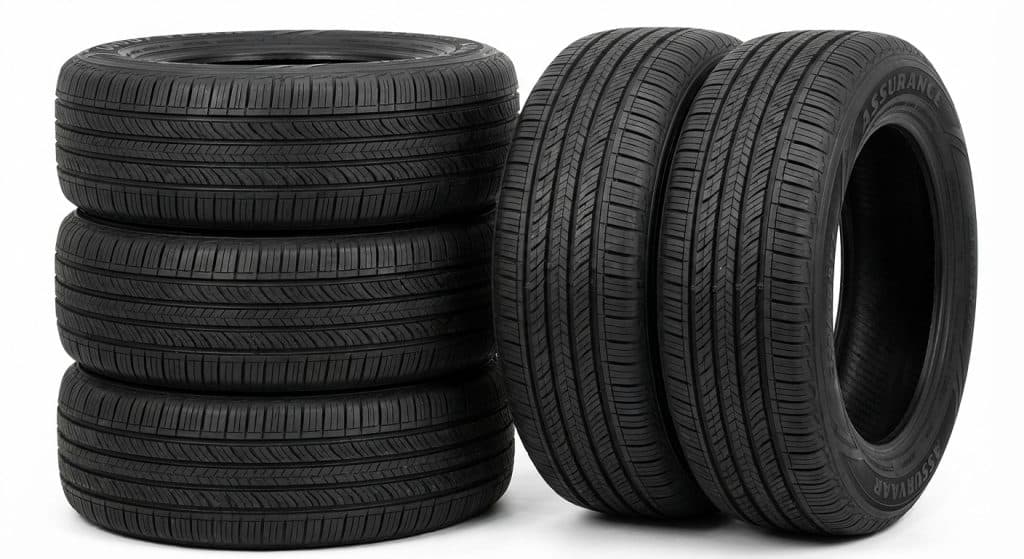
Buying tires shouldn’t feel like studying for an exam, but for most people it does. The sidewall codes, the competing tire types, the pressure from a tire dealer to upsell you. It’s a lot. This guide cuts through all of it so you can choose tires with confidence and stop second-guessing yourself at the shop.
The Tire Questions Everyone Asks First
Before anything else, let’s get the most common questions out of the way. People search Reddit, grab PDF guides, and ask friends, all trying to figure out the same basic stuff. What tire do I need? How do I read that sidewall code? Do I really need winter tires?
The honest answer is that choosing the right tire comes down to three things: where you drive, how you drive, and what your vehicle actually needs. Get those three things right, and the rest falls into place.
All-Season Tires: The Everyday Default
Most cars in North America come from the factory wearing all-season tires, and there’s a good reason for that. An all-season tire is designed to handle a wide range of conditions, dry pavement, light rain, and even a dusting of snow. They’re the practical middle-ground choice for drivers who don’t want to think too hard about swapping tires twice a year.
That said, “all-season” doesn’t mean “all conditions.” An all-season tire is a compromise. It’s not as grippy as a summer tire in hot weather, and it’s not as capable as a dedicated winter tire in deep snow or ice. If you live somewhere with mild winters and mostly drive in mixed weather, an all-season tire is probably your best call.
When you’re shopping a used car and wondering what’s already on it, check the sidewall. You’ll often see “M+S” (mud and snow) or an all-season label right on the tire. If the tires are worn or the wrong type for how you drive, factor a new set into your budget before you buy.
Summer Tires: More Grip, Less Compromise
Summer tires are built for performance. The rubber compound stays pliable in heat, and the tread pattern is optimized for dry and wet road grip rather than cold-weather traction. If you’re driving a sports car, a performance sedan, or any vehicle where handling matters to you, summer tires are worth considering.
The tradeoff is obvious. Summer tires harden and lose grip below about 7°C (45°F). They’re not made for snow or ice at all. Drive on summer tires in a cold snap and you’re genuinely risking your safety, not just your tire tread.
A lot of used sports cars and performance vehicles come with summer tires already on them. If you’re buying one of these cars and you live somewhere with real winters, budget for a second set of wheels with winter tires. It’s the smart move, and many enthusiast owners already do this.
Winter Tires: Not Optional in Cold Climates
If you live somewhere that sees real snow and ice, winter tires aren’t a luxury. They’re a safety feature. The rubber compound in a winter tire stays soft at low temperatures, giving you dramatically better grip when stopping, turning, and accelerating on cold roads.
Independent tests from organizations like Consumer Reports consistently show that winter tires outperform all-season tires on snow and ice by a significant margin. The stopping distance difference alone can mean the difference between a close call and an actual collision.
Dedicated winter tires carry the three-peak mountain snowflake symbol on the sidewall. Look for that symbol, not just the M+S rating, which is a much lower bar to clear.
Tire Size: Reading the Sidewall Code
Every tire has a string of numbers and letters molded into its sidewall. It looks intimidating but it’s straightforward once you know what you’re looking at.
Take a tire marked 225/50R17. Here’s what that means:
- 225 is the tire width in millimeters
- 50 is the aspect ratio, the sidewall height as a percentage of the width
- R means radial construction
- 17 is the wheel diameter in inches
Your vehicle’s recommended tire size is listed in the owner’s manual and on the door jamb sticker on the driver’s side. Always start there. You can go slightly wider for a performance look, but changing the tire size significantly can throw off your speedometer, affect handling, and in some cases cause rubbing against the wheel well.
On a used car, check that all four tires match in tire size. Mismatched tires are a red flag. They can cause handling issues and, on AWD vehicles, can actually damage the drivetrain.
Speed Rating: What That Letter Actually Means
Every tire also carries a speed rating, a letter code that tells you the maximum sustained speed the tire is designed to handle safely. You’ll see it at the end of the tire size code, something like 225/50R17 94V, where the V is the speed rating.
Common speed rating letters and their limits:
- T, up to 190 km/h (118 mph), common on family sedans and minivans
- H, up to 210 km/h (130 mph), very common on passenger cars
- V, up to 240 km/h (149 mph), typical for sports sedans
- W / Y, up to 270–300 km/h, found on high-performance vehicles
Always match or exceed your vehicle manufacturer’s recommended speed rating. Going lower is a safety issue. Going higher is fine, though high-performance rated tires often cost more and may ride stiffer.
Tread-Wear Info: How Long Will These Tires Last?
Every tire sold in North America carries a UTQG (Uniform Tire Quality Grading) rating molded into the sidewall. It includes three numbers: treadwear, traction, and temperature.
The treadwear number is the one most buyers care about. A tire rated 500 should theoretically last twice as long as one rated 250. These ratings are relative comparisons, not absolute guarantees, but they give you a useful benchmark when comparing tires from different brands.
Traction grades run from AA down to C. AA and A are what you want for everyday driving. Temperature grades run A through C, with A being the best heat dissipation. Don’t buy a C-rated tire if you regularly drive at highway speeds in hot weather.
When you’re inspecting a used car, check the tread depth. A tire starts life with roughly 10/32″ of tread. The legal minimum in most U.S. states is 2/32″, but tires really start losing wet-weather performance below 4/32″. Stick a quarter in the tread, if you can see the top of Lincoln’s head, it’s time to replace.
Run-Flat Tires: Convenient but With Trade-Offs
Run-flat tires have reinforced sidewalls that let you keep driving for a limited distance, typically up to 80 km (50 miles) at a reduced speed, even after a complete air pressure loss. BMWs, MINI Coopers, and some other European vehicles come equipped with them from the factory.
The upside is obvious: no need to change a tire on the side of the highway. The downside is that run-flats ride stiffer, wear faster, and cost more to replace. Many vehicles with run-flats don’t even include a spare tire, so if you replace them with conventional tires, make sure you carry a compact spare or a tire inflation kit.
If you’re buying a used car with run-flats, check the tread and sidewalls carefully. Run-flat tires are sometimes driven on after a pressure loss event, which can damage the internal structure in ways that aren’t visible from the outside. An independent inspection before you buy is always smart, and this is doubly true for tires.
Replace or Upgrade Your Tires?
Replacing Tires
A straight tire replacement means buying the same size, type, and load rating that your vehicle came with originally. This is the right move when your tires are worn or damaged and you just want safe, reliable performance back. Replace tires in sets of four when possible. If budget is tight, replace at least in pairs (both fronts or both rears) to keep handling balanced.
Age matters too, not just tread depth. Tire rubber degrades over time even without much driving. Most manufacturers recommend replacing tires after six years regardless of how they look, and ten years is the absolute maximum. Check the DOT code on the sidewall, the last four digits tell you the week and year of manufacture. A tire stamped 2318 was made in the 23rd week of 2018.
Upgrading Your Tires
An upgrade makes sense when you want to improve on what came stock. Moving from a basic touring tire to a higher-performance option can sharpen your car’s handling noticeably. Going from a standard all-season tire to a premium all-season from Michelin or Continental, for example, can meaningfully improve wet braking and road noise.
If you’re upgrading to a wider tire or a different profile, double-check clearances and make sure the new tire size doesn’t affect your speedometer calibration. A tire dealer can help you calculate the right offset, or you can use online tire size calculators to check the math yourself.
A Practical Tire Buying and Maintenance Guide
Shopping for tires is easier now than it’s ever been. You can compare prices online across major retailers, read independent test results from Consumer Reports and similar organizations, and often get tires delivered to a local shop for installation. That said, don’t just buy on price alone. Cheap tires that wear out in two years aren’t a bargain.
Once you have tires on the car, maintenance keeps them lasting longer and performing better. Check tire pressure at least monthly and before long trips. Pressure should match the spec on your door jamb sticker, not the maximum number on the tire sidewall, those are two different things. Rotate tires every 8,000 to 12,000 km (5,000 to 7,500 miles) to even out wear. Get a wheel alignment if you notice the car pulling to one side or if your tire wear looks uneven across the tread.
Find the Right Tires for Your Vehicle
Finding the right tires for your vehicle starts with knowing your tire needs. What’s your climate? How do you prioritize comfort versus grip? What does your budget look like for a full set of tires over time, not just upfront?
To choose the right tire, start with your owner’s manual. It tells you the approved tire size and minimum speed rating for your vehicle. From there, decide on tire type based on your climate and driving style. Then compare specific models using independent tire test results, not just marketing claims from the manufacturer.
Michelin, Bridgestone, Continental, Goodyear, and Pirelli are all well-regarded brands with extensive model ranges. Mid-tier brands like Hankook and Falken often offer solid performance at a lower price point. Avoid buying the cheapest no-name tires you’ve never heard of. Tires are literally the only part of your car touching the road. It’s not where you want to cut corners.
If you’re evaluating a specific used car and want to understand what it should be running, use our browse used cars by make tool to research the model before you buy. Different trim levels sometimes come with different tire specs, and knowing what’s correct for your exact vehicle helps you spot a mismatch before it becomes your problem.
Here’s How It Works
When you’re ready to buy tires, the process is simple. Find the tire size on your door jamb or in your manual. Decide which tire type fits your driving and climate. Set a realistic budget, keeping in mind that four quality tires will typically run anywhere from a few hundred to over a thousand dollars depending on size and brand. Get quotes from two or three sources, including online retailers and local shops.
Always have a qualified shop install and balance your tires. Tire balancing prevents vibration at highway speeds and extends tire life. Have the alignment checked at the same time, especially if the previous owner put some miles on the car without regular maintenance.
If you’re financing a used car and tires are part of what you need to budget for, run your numbers through our car loan calculator so you know exactly what you can afford before you commit.
The Way Tire Buying Should Be
The whole point of understanding tires is to buy with confidence instead of guessing. You now know how to read a tire size, what a speed rating means, the real difference between a summer tire and an all-season tire, and when to replace versus upgrade. That’s more than most people know walking into a tire shop.
Before you buy a used car, run a free VIN lookup tool check to see the vehicle’s history, then look at the tires in person. Old tires, mismatched tires, or the wrong type of tire for the car are all negotiating points. Use what you know to get the right tires for your vehicle and a fair price while you’re at it.
Was this helpful?
Put it to work. Research your next car or browse our top gear picks.